 LadderCage
Fixed Ladder Height Rules Explained
How High Can You Climb A Ladder Without A Cage
24ft federal, 20ft maritime, 16 in clear width (500 mm / 19.7 in build) — height rules explained. Free height compliance check and quote; 24h response. Covers OSHA 1910.28 and EN ISO 14122-4.
Years Manufacturing
Export Countries
Projects Delivered
Quote Response
Height Rules by Standard
Height Rules by Standard (OSHA / Maritime / EN ISO)
Most guides quote only the federal OSHA number. Here is the multi-standard view — so your ladder is compliant for the jurisdiction and facility you actually operate in.
Get My Free Height Check| Standard | Max Height Without Cage | Note |
|---|---|---|
| OSHA 1910.28 (federal) | 24 ft (7.3 m) | PFAS / ladder safety system above 24 ft |
| OSHA Maritime | 20 ft (6.1 m) | Cage or fall protection above 20 ft |
| EN ISO 14122-4 | 3 m climb | Cage required above 3 m |
24 ft Federal
OSHA 1910.28 fixed ladders over 24 ft need a personal fall arrest or ladder safety system; cages suit pre-2018 installations.
20 ft Maritime
OSHA maritime ladders over 20 ft require fall protection — a cage or cage plus fall-arrest where specified.
16 in Clear Width
Whatever the height, a fixed ladder without a cage still needs a 16 in (406 mm) minimum clear width behind rungs — our build 500 mm (19.7 in).
Trigger Points
When Does a Ladder Require a Cage?
The trigger depends on the standard and when the ladder was installed. Beyond the thresholds, compliance options include a cage, a ladder safety system, or a personal fall-arrest system.
- Over 24 ft — federal OSHA fixed ladders need fall protection
- Over 20 ft — maritime ladders need fall protection
- Existing cages — grandfathered under OSHA until 2036
Specifications
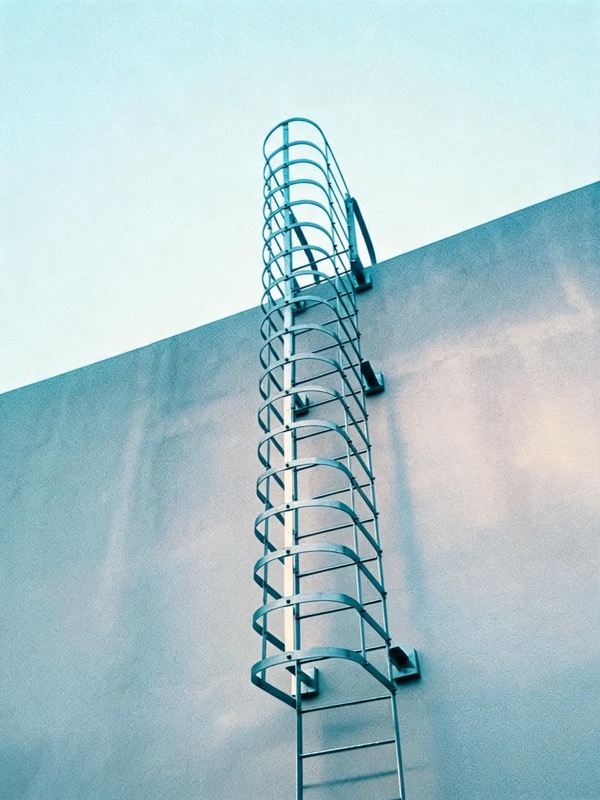
Cage Ladder Specifications
Whether you stay under the threshold or need a cage, the engineered parameters below keep access safe and compliant.
Get My Free Height Check| Specification | Value |
|---|---|
| Rung Diameter | Φ20 mm |
| Rung Spacing | 280 mm (≤300 mm) |
| Clear Width | 500 mm (19.7 in) |
| Cage Diameter | Φ700 mm (hoops 40×5 @≤1500, straps 30×3) |
| Cage Start | 2.2 m above floor |
| Load Rating | 1.5 kN per rung |
| Finish | HDG 85–100 μm / SS304 optional |
| Standards | OSHA 1910.28 · EN ISO 14122-4 · CA Title 8 |
Free Height Compliance Check
Free Height Compliance Check
Send us your height and jurisdiction — an engineer replies within 24 hours with a rule check, compliance options and an itemized quote.
Multi-Standard DoC
Covers OSHA 1910.28, EN ISO 14122-4 and regional cage rules.
Engineer Rule Check
Your exact height checked against the standard that applies to you.
24h Quote & 15–25 Day Lead
Itemized quote in 24 hours; production typically 15–25 working days.
Get a Free Height Check
Get My Free Height Check & Quote
Tell us the height, regional standard and material. An engineer replies within 24 hours with the rule check and a compliant option.
- Free height compliance check
- 24h engineer response
- DoC, MTC & structural calcs included
One Question, Four Answers
Height Thresholds for Ladder Protection, Standard by Standard
How high you may climb uncaged depends on which rulebook governs your site — and the numbers are further apart than most buyers expect. This table puts the thresholds side by side so you can locate your ladder in one glance.
| Standard | Uncaged Limit | Protection Required Above It |
|---|---|---|
| OSHA 1910.28 — general industry | 24 ft | Cage accepted on pre-Nov 2018 ladders; new installs need LSS or PFAS |
| OSHA grandfathering | — | Existing cages valid until 2036-11-18; Sept 2025 proposal to drop the date is undecided |
| EN ISO 14122-4 | 3 m climb | Cage above 3 m; flight max 10 m; rest platforms at ≤6 m intervals |
| AS 1657:2018 — Australia | 3 m climb | Cage and platform rules above 3 m |
| BS 4211 — UK practice | Per risk assessment | Dimensional and fabrication baseline for the cage itself |
| Maritime (US) | 20 ft | Cage or equivalent protection above threshold |
When a ladder serves several jurisdictions — a US-owned plant built to EN drawings — design to the stricter line and document the choice. Send us your climb height and country and we return the governing threshold with your quote in 24 hours.
Measure Before You Decide
The Walkthrough: Reading Your Own Ladder Against the Height Thresholds
The threshold table answers which number governs. This walkthrough answers the harder question buyers get wrong: where that number is measured on your ladder, and what counts toward it. Run the four steps in order — most borderline ladders resolve at step 2, and the rest resolve at step 3 without a single argument with an inspector.
| Step | The Move | What It Settles | Trap It Avoids |
|---|---|---|---|
| 1 — Measure the rise, not the wall | Vertical distance from the base landing to the top step-off point | The climb height that every threshold compares against | Measuring along the slope or to the eaves — both inflate nothing, hide nothing, and convince no inspector |
| 2 — Add every flight on the run | Sum consecutive climbs that share one access route without a full landing break | Whether a 3 m plus 3 m staircase is a 6 m climb — on EN sites the platform interval of 6 m decides | Treating each short flight as its own under-threshold ladder |
| 3 — Date the install | Establish before or after November 19, 2018, with a record | Whether the US 24 ft question is grandfathering or a new OSHA 1910.28 build | Assuming an old ladder is exempt when the record shows a 2019 replacement section |
| 4 — Design to the stricter code | Where jurisdictions overlap, spec to the lower threshold and document the choice | A US-owned plant built to EN drawings stays compliant under either inspector | A bay that passes at home and fails at the corporate audit |
When the measurement lands within half a metre of any threshold, treat it as over — protection decisions made at the margin do not age well. Send the rise, the flight layout and the install year: the free height check returns the governing threshold and the caged or system build that satisfies it, itemized, inside 24 hours.
Act on the Number
Reader Decision Guide: What Your Measured Height Obliges You to Buy
A measured climb height is only useful if it triggers the right action. The three bands below cover every measurement outcome, and each band names what you owe the climb — including the band where the correct answer is a paint brush and a tidy base, not a purchase order.
Below every threshold — buy discipline only
Your band if the rise stays under 3 m on EN and AS sites, or under the OSHA line in US general industry with no aggravating rule in play. No cage is owed. Spend on a clear landing zone, a marked first rung and honest housekeeping — the dangers in this band are trips and poor visibility, not free fall, and no steel fixes those.
Inside the caged envelope — buy the cage
Your band between 3 m and 10 m on EN and AS sites, or the US equivalents a cage still satisfies. A single caged flight at $95 per metre HDG — $600–900 for a 6 m climb — covers the duty, with a $150–400 rest platform joining once the climb passes 6 m. This is the band where one purchase closes the question for decades.
Past the caged ceiling — buy the system
Your band above 10 m under EN ISO 14122-4, or above 24 ft on post-November 2018 US installs where OSHA 1910.28 requires an LSS or PFAS. The ladder can still carry platforms at 6 m intervals, but active arrest is the owed protection — quote it against the same climb, in the same crate, from the same factory.
Between bands or on the margin? Send the measurement from step 1 — the free height check places you in one band, with the quote for exactly that band, inside 24 hours.
From Threshold to Quote
What Each Feature Does at Your Measured Height
Five features, each one matched to a height band decision.
| Feature | Advantage | Your Outcome |
|---|---|---|
| Free height compliance check | your measurement read against every governing code | the threshold that applies, named in writing in 24 hours |
| Cage from 2.2 m, engineered for 3 m duty | protection starts before the EN and AS trigger | the 3 m line is covered with margin, not exactly |
| Rest platforms at 6 m intervals | flight lengths cut to the EN ISO 14122-4 rhythm | climbs inside the 10 m caged ceiling stay caged |
| LSS and PFAS quoted on the same climb | the past-ceiling band priced without a second vendor | the 24 ft and 10 m rules resolve in one purchase order |
| Single pieces up to 14 m | long flights ship unspliced where transport allows | fewer joints on tall climbs means fewer inspection points |