 LadderCage
Cage Ladder OSHA Compliance
Caged Ladders OSHA
Cage ladder OSHA requirements – 24 ft threshold, 2036 phase-out and compliant options. Free compliance checklist; DoC and test reports.
Fall-Protection Threshold
Cage Phase-Out Date
Projects Delivered
Checklist Reply
OSHA Quick Reference
Caged Ladders OSHA
The requirements at a glance — what triggers fall protection, where cages still apply, and when they phase out.
| OSHA Requirement | Value |
|---|---|
| Fall-Protection Threshold | Fixed ladders over 24 ft |
| Compliant Cage | Permitted until 2036 phase-out |
| Cage Start | 2.2 m (7 ft 3 in) above floor |
| Landing Platform Interval | Every 50 ft for caged ladders |
| Existing caged ladders after 2036 | PFAS/LSS required |
| Standard Reference | OSHA 1910.23 & 1910.28 |
24 ft Threshold
Cage Ladder OSHA – 24 ft Threshold
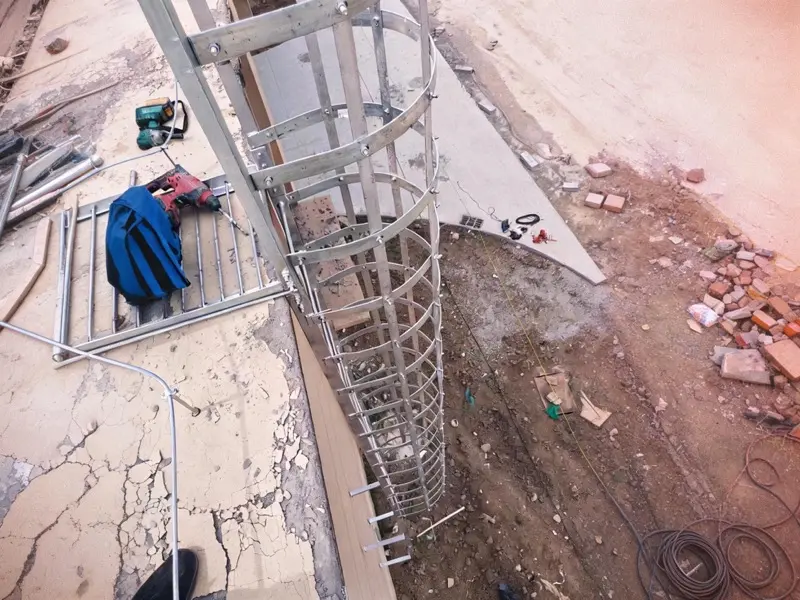
Under OSHA 1910.28, any fixed ladder extending more than 24 ft above a lower level requires fall protection. A compliant cage qualifies during the transition period, and we document every build with a Declaration of Conformity.
- Over 24 ft = fall protection required
Cage or personal fall arrest / ladder safety system
- Compliant cage geometry
Hoops Φ700, rung spacing 280 mm, cage start 2.2 m
- Documented compliance
DoC and test reports supplied with every ladder
2036 Phase-Out & Compliant Options
2036 Phase-Out & Compliant Cage Ladder Options
Cages on existing fixed ladders phase out by November 2036 in favor of fall-arrest systems. We build both routes — cage systems today and fall-arrest conversion ready.
Compliant Cage
Fits existing ladders; permitted until 2036.
Fall-Arrest System
PFAS / ladder safety system for new builds and upgrades.
| Cage Ladder Spec | Value |
|---|---|
| Rung Diameter | Φ20 mm |
| Rung Spacing | 280 mm (≤300 mm) |
| Clear Width | 500 mm |
| Cage Diameter | Φ700 mm (hoops 40×5 @≤1500) |
| Load Rating | 1.5 kN per rung |
| Material | Q235B · HDG ISO 1461 · SS304 |
Free Compliance Checklist
Free Cage Ladder OSHA Compliance Checklist
Get the free compliance checklist — the 24 ft / 2036 requirements summary, plus DoC and test-report samples — delivered to your inbox within 24 hours.
- OSHA 1910.23 & 1910.28 Compliant
Cages and fall-arrest options documented
- DoC & Test Reports
Declaration of Conformity and test reports with every ladder order
- 24-Hour Quote
Itemized pricing for cage or fall-arrest compliant supply
Get an OSHA Quote
Get an OSHA Cage Ladder Quote
Compliance checklist and itemized quote within 24 hours. Tell us your ladder type, height and compliance needs.
- Free compliance checklist
- Cage and fall-arrest options
- DoC & test reports with every order
Dimension Reference
The Numbers an Inspector Measures on a Cage Ladder
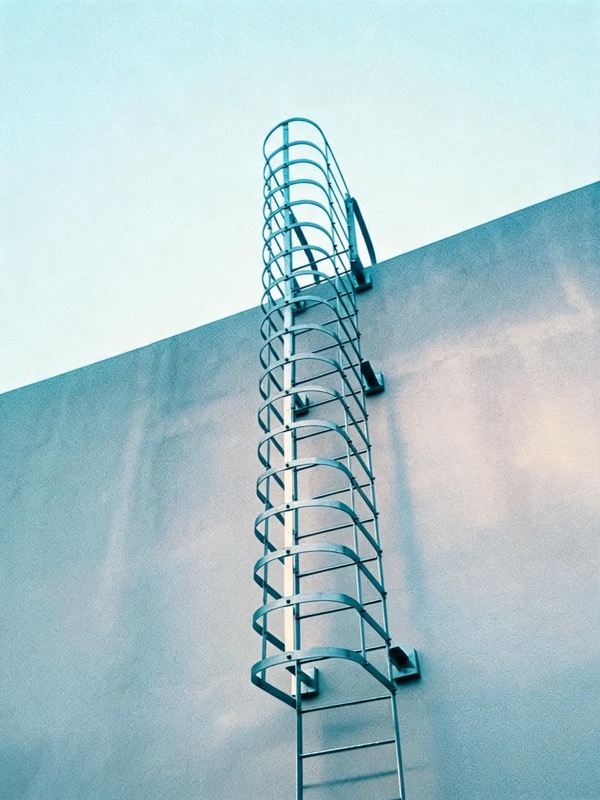
When an auditor walks up to your ladder with a tape, these are the seven measurements that decide pass or fail. Every cage we ship is fabricated and documented against them — print this table and check the delivered steel against the paperwork.
| Measurement | Compliant value | How we build it |
|---|---|---|
| Cage inside width | 27 to 30 in from climbing centerline | Template-jigged hoops, checked per batch |
| Hoop spacing | No more than 6 ft 6 in | 1500 mm centers in standard designs |
| Cage bottom flare | At least 4 in | Flared first hoop on every cage |
| Cage start height | 7 ft 6 in to 8 ft above base | Set from your drawing dimensions |
| Cage top extension | 42 in above top landing surface | Extension hoops to the platform edge |
| Rung clear width | At least 16 in | Q235B or SS304 rungs, standard section |
| Rung design load | Concentrated load per rung | 1.5 kN (about 337 lbs) with safety factor |
Geometry is only half the audit — the other half is whether a cage still qualifies as fall protection for your ladder. New fixed ladders over 24 ft need a ladder safety or personal fall arrest system, so confirm your scenario before ordering.
Enforcement Perspective
Inspector's Walkthrough — The Tape Measure Meets the Cage
Where a cage is the accepted protection, the officer skips the philosophy and goes straight to geometry. Six numbers get measured, in imperial, from the bottom of the climb to the top. Here is each measurement, the tolerance it lives or dies by, and how our production numbers land inside it.
| Measured On Site | OSHA Figure | Our As-Built Number |
|---|---|---|
| Cage inside width, climbing centerline out | 27–30 in | Φ700 mm — 27.6 in, mid-band |
| Vertical distance between hoops | ≤6 ft 6 in | 1500 mm hoops — 4 ft 11 in |
| Bottom flare of the lowest hoop | ≥4 in outward | flared bottom band, detailed on drawing |
| Cage start above the base | 7 ft 3 in–8 ft | 2.2 m sits at the band's lower edge (EN builds) |
| Cage top above the landing surface | 42 in extension | extension fabricated to climb height |
| Clear rung width between side rails | ≥16 in | 500 mm — 19.7 in |
After the tape comes the folder: the same numbers printed on a signed dimension sheet, backed by the DoC and the EN 10204 3.1 MTC. When the paper matches the wall, the inspection is a formality — that match is manufactured on purpose, not left to luck.
Compliance Decision Guide
Keep, Repair, Retrofit or Replace — the Asset Decision Under OSHA
Not every aging caged ladder needs money spent on it, and not every one may keep its cage. The deciding facts are the cage's condition, the climb height and the install date. Four rows, four budgets, one supplier for whichever row you land in.
| Your Situation | Rule That Applies | Our Supply |
|---|---|---|
| Sound cage, geometry still in tolerance | a compliant cage in good repair satisfies the duty where it is accepted | annual dimension re-check list, free with any order |
| Corroded hoops, straps or rungs | like-for-like repair keeps the original regime — replace sections, not the system | components to original geometry, HDG per ISO 1461, MTC 3.1 |
| Grandfathered cage, climb over 24 ft | protection accepted until 2036-11-18 — deadline under pending OSHA review as of August 2026 | staged retrofit: rail LSS quoted now, installed at your shutdown cadence |
| Cage beyond repair, or new climb | over 24 ft after 2018-11-19 the replacement must carry an LSS or PFAS | new LSS-ready ladder, cage included below 24 ft where wanted |
Send one photo per ladder and the climb heights: the keep-repair-retrofit-replace verdict comes back itemized within 24 hours, so the budget conversation starts from engineering, not guesswork.
What OSHA-Grade Building Buys You
Geometry In, Walkthrough Passed
Each fabrication choice below is one inspection question answered in advance.
| Feature | Advantage | Your Outcome |
|---|---|---|
| Hoops at 1500 mm, not 6 ft 6 in | built to the fabricator norm inspectors recognize | the tape reads 4 ft 11 in — margin, not argument |
| Φ700 mm cage basket | centered in the 27–30 in band | no borderline measurement on walkdown day |
| 1.5 kN rung design load in the calc pack | capacity documented, not asserted | loading questions close with a signed sheet |
| HDG 85–100 μm per ISO 1461 | corrosion budget protects the geometry for decades | the numbers measured this year still measure in year ten |
| DoC plus MTC with every crate | paper matches steel from day one | the file check ends before it starts |
Caged Ladders OSHA FAQ
Related Cage Ladder Pages
All Cage Ladders
Browse by type, material & application
Standards Hub
OSHA, EN ISO, BS, AS requirements
OSHA Cage Ladder Requirements
24 ft threshold & 50 ft platforms
New OSHA Cage Ladder Rules
Walking-working surfaces updates
Ladder Safety Cage OSHA
Cage geometry and requirements
Get a Quote
24h itemized quote