 LadderCage
Ladder Cage OSHA Compliance Basics
Ladder Safety Cage OSHA
OSHA cage ladder basics – what's compliant now, the 2018-11-19 rule for new ladders, cages grandfathered to 2036-11-18, and your options. Free OSHA compliance guide; DoC and test reports.

Now
Phase-Out Date
Projects Delivered
Guide Reply
Requirements Quick Reference
OSHA Cage Ladder – Compliant Now & 2036 Changes
What triggers fall protection, where cages still apply, and when they phase out — at a glance.
| Specification | Value |
|---|---|
| Fall-Protection Threshold | Fixed ladders over 24 ft |
| Compliant Cage | Permitted on pre-2018 ladders until the 2036-11-18 transition |
| Cage Start | 2.2 m (7 ft 3 in) above floor |
| Rung Spacing | 280 mm (≤300 mm) |
| Hoop Diameter | Φ700 mm |
| New Ladders After 2018-11-19 | Personal fall arrest / ladder safety system |
| Standard Reference | OSHA 1910.23 & 1910.28 |
Your Compliant Options
OSHA Caged Ladders – Your Options
Two compliant routes — a cage system today or a fall-arrest / ladder safety system for new builds and upgrades. We supply and document both.
- Compliant Cage
Fits existing ladders; permitted through the transition period
- Fall-Arrest System
Personal fall arrest / ladder safety system for new builds and 2036 upgrades
- Documented Either Way
DoC and test reports shipped with every order
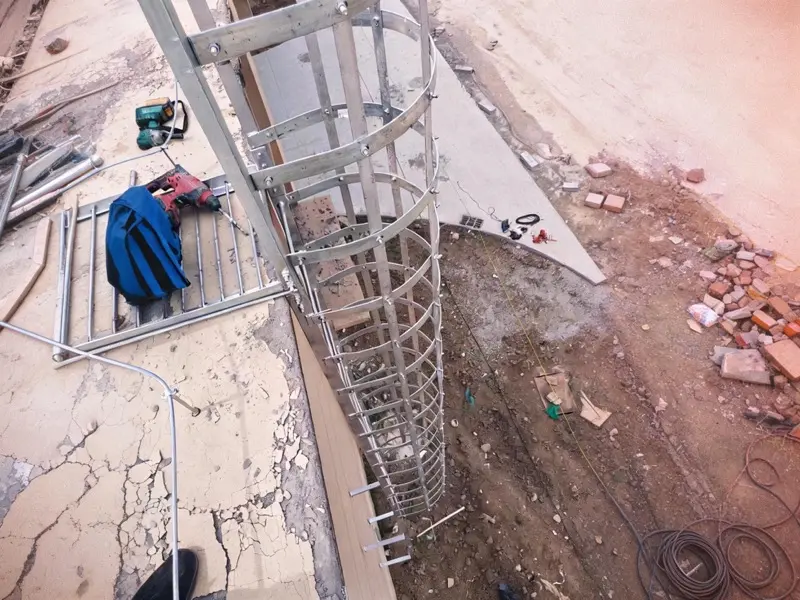
OSHA 1910.23 & 1910.28
OSHA Cage Ladder Compliance (1910.23 & 1910.28)
OSHA 1910.23 covers fixed ladder construction; 1910.28 covers fall protection. EN ISO 14122-4 provides the geometry reference for cage supply.
- OSHA 1910.23
Fixed ladder rungs, spacing and clearances
- OSHA 1910.28
Fall protection on fixed ladders over 24 ft
- EN ISO 14122-4
Cage geometry cross-reference for European projects
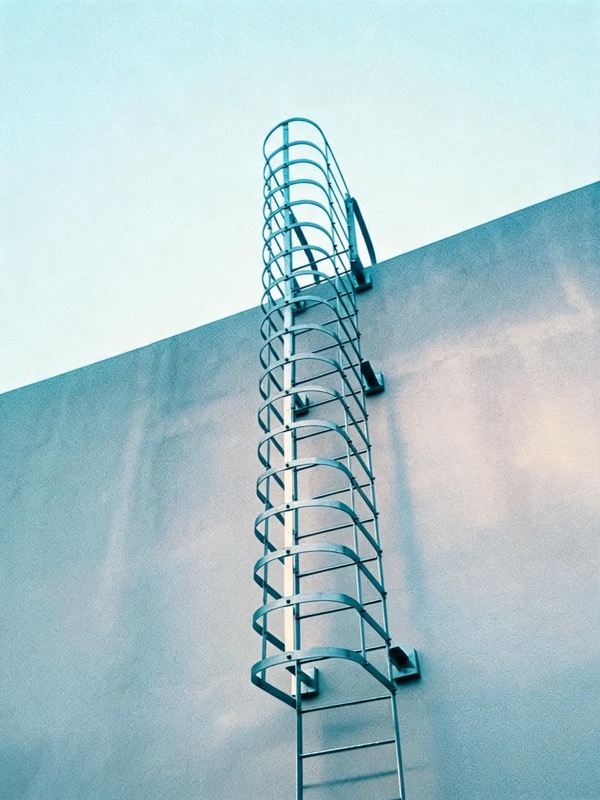
Free Guide & Documentation
Free OSHA Cage Ladder Guide & Docs
Get the free OSHA compliance guide — the 24 ft / 2036 summary, DoC and test-report sample — delivered within 24 hours.
- Free Compliance Guide
Requirements summary for your ladder type and height
- DoC & Test Reports
Declaration of Conformity and test reports with every order
- 24-Hour Quote
Itemized pricing for cage or fall-arrest compliant supply
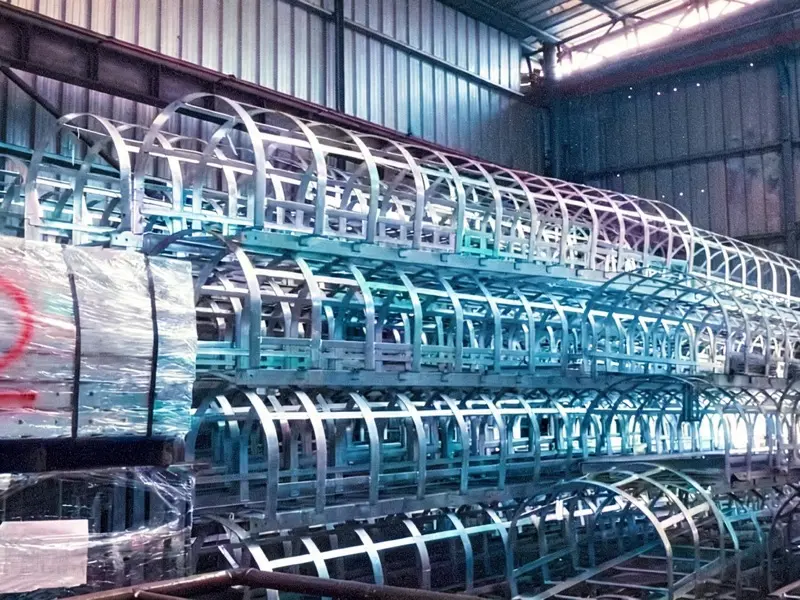
Get an OSHA Cage Ladder Quote
Get an OSHA Cage Ladder Quote
Free OSHA compliance guide and itemized quote within 24 hours. Tell us your ladder type, height and compliance needs.
- Free compliance guide
- Cage and fall-arrest options
- DoC & test reports with every order
Three Routes Compared
Cage vs Ladder Safety System vs Personal Fall Arrest
OSHA 1910.28 accepts three ways to protect a fixed ladder climb. They differ in how they work, when they qualify and what they cost — this table puts the three side by side so your safety committee can choose in one meeting.
| Route | How it protects | Where it qualifies | Cost signal |
|---|---|---|---|
| Cage | Passive steel enclosure; hoops restrain a slipping climber against the rungs | Existing pre-2018 ladders through the transition; new ladders at or under 24 ft; repair and replacement work | HDG from $95/m; 6 m ladder $600–900 ex-works |
| Ladder safety system | Rail or cable on the ladder plus a carrier linked to the harness; travels with the climber and arrests a fall | Required for new fixed ladders over 24 ft after Nov 19, 2018; the retrofit route for existing ladders | Quoted per project; retrofit assessment free |
| Personal fall arrest | Worn system — anchorage, connector and full-body harness working together | Accepted alternative to an LSS for new ladders over 24 ft; flexible across multiple structures | Program cost per user and anchor point |
Most sites end up with a mix: cages maintained where they still qualify, an LSS on new tall ladders, and fall arrest gear where workers cross between structures. We supply the steel and the systems from one factory, so the mix arrives as one documented package.
Enforcement Perspective
Inspector's Walkthrough — What Gets Checked on a Cage vs a Safety System
A cage is passive steel, so an officer checks its geometry and condition. A ladder safety system is active equipment, so the checks shift to function and records. Knowing which column your ladder lives in tells you what to prepare — and what we document before either visit.
| Check | On a Safety Cage | On a Ladder Safety System |
|---|---|---|
| First measurement | inside width 27–30 in from centerline | rail or cable continuity over the full climb |
| Vertical rhythm | hoops ≤6 ft 6 in apart, flare ≥4 in at the bottom | carrier travels without snag from base to top |
| Start and finish | cage starts 7 ft 3 in–8 ft up, extends 42 in at top | anchorage torque and mounting bolts to drawing |
| Condition evidence | corrosion, deformed hoops, missing straps | harness and connector inspection tags in date |
| Paper trail | DoC, dimension sheet, MTC 3.1 | system DoC, install records, training log |
| Regime status | accepted where installed pre-2018-11-19, to 2036-11-18 pending review | required on new over-24ft climbs since 2018-11-19 |
Our shipments answer both columns: cages arrive geometry-certified on paper, and LSS-ready builds arrive with rail mount positions pre-drilled and documented, so the functional column has somewhere to bolt.
Compliance Decision Guide
Cage or Safety System — Choosing by How the Ladder Is Used
Where the rules allow either protection, the right choice follows usage, not preference. Climb frequency, who climbs, and how disciplined your harness program is decide more than price does. Five operating situations, the logic for each, and what we ship.
| Operating Situation | Logic That Decides | Our Supply |
|---|---|---|
| Occasional inspection climbs, under 24 ft | no fall protection duty triggered — a cage is the accepted, economical answer | standard caged ladder, HDG from $95/m, DoC included |
| Many trades, many climbs per shift | harness issue-and-log overhead grows faster than rail cost | rail LSS with traveling connector — clip in and climb |
| Sound grandfathered cage, over 24 ft | keep it to 2036-11-18; the deadline is under pending OSHA review, so spend only when final | monitor plan plus quoted retrofit held ready |
| New over-24ft install, post-2018-11-19 | the system is not optional — cage alone cannot close 1910.28 | LSS-ready ladder, mounts pre-drilled to drawing |
| Cage retained plus system added | during transition the pair covers both regimes on one structure | retrofit kit engineered around the existing cage geometry |
Send climb counts and shift patterns with your heights — the selection comes back reasoned in writing, within 24 hours, at no charge.
What Safety Engineering Buys You
From Protection Hardware to a Defensible Program
Each line converts a safety component into an outcome your program can be audited against.
| Feature | Advantage | Your Outcome |
|---|---|---|
| Cage geometry certified on paper | passive protection provable without a tape fight | walkdown passes in minutes on caged climbs |
| LSS-ready rail mounting | functional protection bolts on without hot work redesign | 1910.28 closes on schedule, not next shutdown |
| 1.5 kN rung rating in the calc pack | capacity assumptions documented per order | loading queries answered by a signed sheet |
| Five-gate QC photo record | each protection component photographed at build | condition disputes settled by evidence |
| Written selection rationale, free | cage-versus-system choice reasoned, not guessed | your program file shows why, not just what |
Ladder Safety Cage OSHA FAQ
Related Pages
All Cage Ladders
Browse by type, material & application
Standards Hub
OSHA, EN ISO, BS, AS requirements
OSHA Cage Ladder Requirements
24 ft threshold & 50 ft platforms
New OSHA Cage Ladder Rules
Walking-working surfaces updates
Caged Ladders OSHA
24 ft threshold & 2036 options
Get a Quote
24h itemized quote