 LadderCage
Factory-Direct Aluminium Cage Ladders
Aluminium Cage Ladder
Lightweight, rust-free aluminum cage ladder with stainless hardware — maintenance-free design cuts lifetime cost. DoC and test reports included.
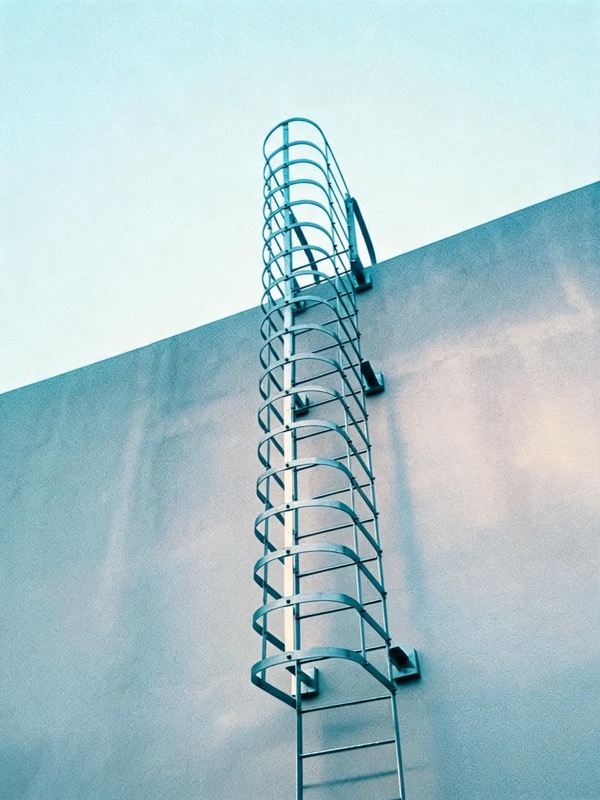
Per-Rung Rating (≈337 lb)
Rust, Repainting or Recoating
Projects Delivered
Quote Response
Aluminium Cage Ladder Benefits
Aluminum Cage Ladder – Lightweight & Rust-Free
Built for coastal, chemical, food and light-industrial environments where steel needs constant upkeep.
Lightweight
Around one-third the weight of steel — easier to lift, rig and install without heavy machinery.
Rust-Free & Non-Spark
No coating to chip, no rust to treat, and no spark risk — ideal for chemical and process plants.
SS Hardware
All fasteners and brackets in stainless steel for a corrosion-free, maintenance-free assembly.
Material Comparison
Aluminum vs Steel – Lifetime Cost
Aluminium costs a little more up front than galvanized steel, but the maintenance-free design recovers that difference in lifetime cost — no repainting, no rust treatment, no premature replacement.
Get My Aluminum Quote| Factor | Aluminium | Galvanized Steel |
|---|---|---|
| Weight | Lightweight (~⅓ of steel) | Heavy |
| Corrosion | Rust-free, coastal-safe | HDG 85–100 μm, needs touch-up |
| Maintenance | Maintenance-free | Periodic recoating |
| Spark Risk | Non-sparking | Potential spark on impact |
| First Cost | Higher | Lower |
| Lifetime Cost | Lower over service life | Higher with upkeep |
Specifications
Stainless Hardware & 1.5 kN per Rung Rating
Every aluminium cage ladder is made-to-order with the engineered parameters below.
| Specification | Value |
|---|---|
| Material | Aluminium 6061 / 6005 / 6063 |
| Rung Diameter | Φ20 mm |
| Rung Spacing | 280 mm (≤300 mm) |
| Clear Width | 500 mm |
| Cage Diameter | Φ700 mm (hoops 40×5 @≤1500, straps 30×3) |
| Load Rating | 1.5 kN per rung (≈337 lb) heavy duty |
| Hardware | SS304 stainless fasteners & brackets |
| Standards | OSHA 1910.28 · EN ISO 14122-4 |
Compliance Docs With Every Order
Compliance Docs & Test Reports
OSHA/EN ISO compliant aluminium cage ladders with a full compliance file shipped on delivery.
- DoC — OSHA 1910.28 & EN ISO 14122-4
Declaration of Conformity to the relevant standard
- MTC 3.1 Material Certificate
EN 10204 3.1 for aluminium alloys and SS hardware
- Structural Test Reports
Load-tested at 1.5 kN per rung (≈337 lb) with signed calculations
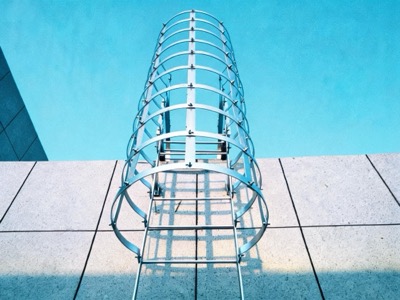
Get an Aluminum Quote
Get an Aluminum Cage Ladder Quote
Free quote in 24 hours + free compliance kit with every order. Tell us your height, load and coastal or chemical environment — we handle the rest.
- 24h itemized quote
- Free drawing review
- DoC, MTC & test reports included
Material Selection
Aluminium or Galvanized Steel — Scenario Table
Both materials meet the same OSHA 1910.28 and EN ISO 14122-4 geometry — Φ20 mm rungs at 280 mm centres, 500 mm clear width, Φ700 mm cage — so the decision comes down to environment, duty and lifecycle budget. HDG steel lists at $95/m ex-works; aluminium is quoted per project and earns it back by deleting repainting. Use the scenarios below to shortlist before you send drawings.
| Site Scenario | Recommended | Why |
|---|---|---|
| Inland dry plant, budget tender | HDG steel | Lowest first cost at $95/m; ISO 1461 coating 85–100 μm |
| Coastal or marine exposure | Aluminium | Rust-free with no repaint; SS304 hardware avoids galvanic couples |
| Chemical or wastewater duty | Aluminium or FRP | Corrosion resistance without a coating to damage |
| Spark-sensitive process areas | Aluminium | Non-sparking on impact |
| Frequent manual handling and roof access | Aluminium | About 40% lighter than steel — easier rigging by hand |
| Heavy industrial duty, maximum stiffness | Steel | Stiffer at the same section; 1.5 kN per rung rating |
Atmosphere by Atmosphere
The Service Environment Matrix — Before You Pick a Metal
Every enquiry we take starts with one question: what does the air around this ladder do for a living? The answer maps to an ISO 9223 corrosivity class, and the class decides the metal more honestly than any brochure. Aluminium does not rust — but it is not automatically the right answer, and paying for the wrong durability is money gone. Read your site against the matrix, then let the scenario table above confirm the call. One rule keeps it honest: the HDG column carries our flat $95/m rate, and where aluminium wins, the win is written down so your file shows why.
| ISO 9223 Class | Typical Site Around the Ladder | HDG Steel, 85–100 μm | Aluminium 6063-T5 | Stainless Option |
|---|---|---|---|---|
| C2 — rural, dry interiors | barn, dry warehouse, roof plant room | 20–35 years by ISO 14713 — $95/m wins on cost | decades uncoated, premium not justified by air alone | over-spend at 1.8x unless food rules apply |
| C3 — urban, light industry | town works, food washdown bays | 15–25 years, still the budget answer outdoors | the washdown pick — no paint to strip in hygiene zones | SS304 1.8x where metal must survive caustic foam |
| C4 — industrial, chemical carry-over | plating shop, pulp and paper, battery rooms | 10–20 years with inspection | spark-free and coating-free — often the safest call | SS316 2.5x for chloride-bearing mist |
| C5 — coastal surf, heavy salt | desalination, harbour jetty, offshore-adjacent | 8–15 years then refurbishment | alloy choice must be confirmed per project — salt pits some tempers | SS316 2.5x is the durable default |
Send the site description with your heights and we place it in the right row in the same 24-hour quote — with the coating or alloy certificate that proves the call, archived against your order for 10 years.
Where the Money Actually Leaks
Four Aluminium Calls That Cost Buyers Twice
A wrong metal choice never fails loudly — it just bills you slowly, either on purchase day or at year ten. These are the four we see most often on drawing mark-ups, each with the correction that costs least.
| The Call | How It Bills You Twice | Least-Cost Correction |
|---|---|---|
| SS316 specified across a whole inland plant "to be safe" | 2.5x the HDG rate on every climb that C2–C3 air would have left alone for decades | zone the site: HDG $95/m inland, stainless only on the washdown and brine rows |
| Bare aluminium assumed fine in surf-zone salt | pitted stringers and a replacement ladder inside the steel one's lifespan | state the distance to salt water in the RFQ — we confirm alloy per environment before quoting |
| Aluminium ordered by copying the steel drawing | under-sized rails carry the load poorly and the re-fab erases the weight saving | send heights and duty; the free proposal drawing arrives resized in DWG or DXF |
| Alloy bought with no material certificate | an audit or insurance claim with nothing behind the temper marking | MTC 3.1 with every order — included in the price, never a line item |
Feature to Outcome
Why the Aluminium Cage Ladder Earns Its Line on the PO
Five rows your project engineer will recognise — each advantage lands as a cost or risk that never reaches your site.
| Feature | Advantage | Your Outcome |
|---|---|---|
| Extruded 6063-T5 with cage from 2.2 m | full OSHA 1910.28 / EN ISO 14122-4 geometry at ≈ 40% less mass | compliant climb your riggers can hand-carry and bolt |
| Zero coating system | no zinc, no paint, no touch-up stock | the maintenance line in your asset plan stays empty |
| MTC 3.1 on the alloy, every heat | traceable chemistry, not a temper sticker | audit and insurance questions answered from the file |
| Free proposal drawing in DWG / DXF / PDF | resized sections before you commit a dollar | no drafting invoice, no geometric surprises at install |
| Records and drawings archived 10 years | repeat orders quote in hours at your exact geometry | the next extension of the site is a phone call, not a project |
Field Story — a Washdown Hall Where Steel Could Not Stay
Why a Beverage Bottler Chose Aluminium 6063-T5 — and What the Shift Change Noticed First
In hygiene zones the ladder fights the cleaning chemicals as much as the weather. This story shows when aluminium stops being a premium and starts being the only sensible metal.
A beverage plant's CIP hall washes down every four hours with caustic foam. The original HDG caged ladder over the filler line was seven years old and already on its second repaint campaign — caustic attacks the zinc, then the steel, and hygiene auditors were flagging flaking coating above an open product zone. The maintenance lead had a rule from corporate: no coating systems above the line, period.
That constraint is exactly where aluminium 6063-T5 earns its price. No zinc to strip, no paint to flake, nothing above the line but bare, passivated alloy. Our engineer resized the sections for the alloy — aluminium ordered by copying a steel drawing carries load badly — and quoted the 8 m climb with cage from 2.2 m, hoops and straps in matching alloy. The unit weighed roughly 40% less than the steel equivalent, which mattered more than anyone expected: the hall has no crane access after 6 p.m., and the swap was carried in and bolted by two technicians during a single CIP gap.
The alloy shipped with an MTC 3.1 on the heat, the DoC named OSHA 1910.28 and EN ISO 14122-4 as always, and the hygiene audit closed the coating finding the same month. The next finance question — what does it cost over ten years — answered itself: no repaint campaigns, no touch-up stock, no coating line in the maintenance budget at all.
| Washdown Fact | What the Aluminium Build Did About It |
|---|---|
| Caustic foam every 4 hours | no zinc or paint system to attack — bare 6063-T5, passivated |
| No coating allowed above product | compliance by material choice, not by inspection schedule |
| No crane access after 6 p.m. | ≈ 40% lighter than steel — two technicians hand-carried the swap |
| Hygiene audit finding on flaking | finding closed the same month the unit bolted in |
| Ten-year cost question | zero repaint campaigns, zero coating stock in stores |