 LadderCage
Complete Access Routes, One Supplier
Conveyor Cage Ladder
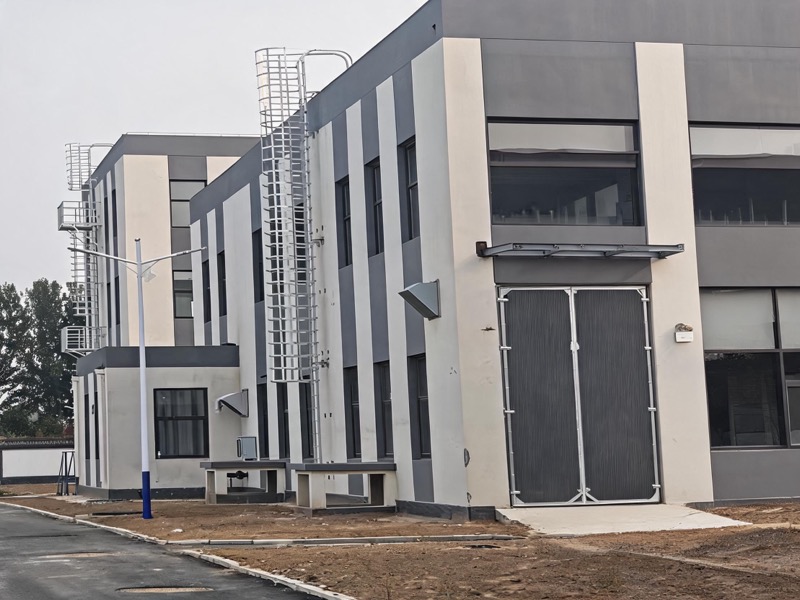
Conveyor & duct cage ladders – complete access routes, welded steel, factory built, one supplier. EN ISO 14122-4 compliant; DoC with order.
Projects Delivered
Countries Exported
Quote Response
Supplier, One Order
One Order, Full Route
Duct Cage Ladder – Overhead Access Routes
Maintenance above a conveyor or duct should not mean juggling multiple suppliers. We deliver the ladder, platform and guardrails as one engineered access route from a single factory.
- Ladder + Platform + Guardrails
Complete route, one order, no third-party coordination
- One Supplier
Factory-built and inspected together for fit and finish
- Fast Production
Scheduled around your line shutdown, typically 15–25 working days
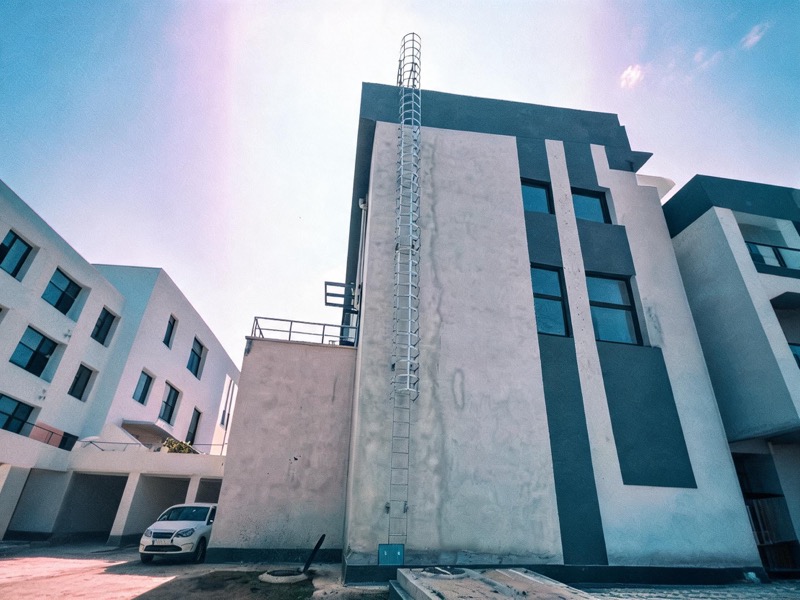
Conveyor & Duct Applications
Complete Access – Ladder, Platform & Guardrails
Wherever production lines run overhead, your team needs safe, code-compliant access. We build for conveyors and ducts alike.
Conveyors
Caged access to conveyor lines for belt, roller and drive maintenance – with platforms where you need to stand and work.
Ducts
Overhead duct access routes with guardrails, engineered to reach filters, dampers and inspection points safely.
Specifications
Conveyor Ladder Specifications
Engineered parameters for every conveyor and duct cage ladder, built with the platform and guardrails that complete the route.
| Specification | Value |
|---|---|
| Rung Diameter | Φ20 mm |
| Rung Spacing | 280 mm (≤300 mm) |
| Clear Width | 500 mm |
| Cage Diameter | Φ700 mm (hoops 40×5 @≤1500, straps 30×3) |
| Cage Start | 2.2 m above floor |
| Load Rating | 1.5 kN per rung |
| Access Route | Ladder + platform + guardrails, one order |
| Standards | EN ISO 14122-4 |
Compliance & Documentation
EN ISO 14122-4 Compliance & Documentation
Every access route ships with its compliance file, and our factory and logistics track record backs the delivery.
- DoC – EN ISO 14122-4
Declaration of Conformity with every order
- MTC 3.1 Material Certificate
EN 10204 3.1 for Q235B / HDG / SS304
- Factory & Logistics Track Record
500+ projects delivered in 50+ countries
Get a Conveyor Ladder Quote
Get a Conveyor Ladder Quote
Tell us conveyor or duct, height and length – our engineers reply within 24 hours with a drawing review, access route notes and a quote for the complete system.
- 24h itemized quote
- Complete route, one supplier
- DoC & MTC included
Where Ladders Live on a Conveyor System
A conveyor line only fails in a handful of places — the drive, the transfer chutes, the tripper, the take-up. Maintenance access planning follows that map, and the ladder spec follows the structure each point sits on. An enclosed ground gallery keeps weather off the steel, while an elevated gantry over the yard takes everything the climate can throw. One material and one layout cannot serve both without wasting money somewhere.
This is the access map our engineers draw before quoting any conveyor project.
| Conveyor Structure | Ladder Configuration | Environment | Finish Logic |
|---|---|---|---|
| Ground-level enclosed gallery | Wall-fixed caged run to gallery door | Dry, dust-controlled interior | HDG Q235B is more than enough |
| Elevated outdoor gantry | Caged tower run, platforms at 6 m | Rain, sun, wind-driven dust | HDG to ISO 1461, 85–100 μm |
| Transfer tower | Multi-level run with side exits | Chute dust at every level | HDG, wash-down option in SS304 |
| Tripper and take-up access | Short caged run with landing platform | Heaviest spillage and abrasion | HDG with easily renewed parts |
Site Walkthrough
Ladders Along a Conveyor Line, Tower by Tower
Miguel maintains a 2 km overland conveyor with eleven transfer towers. Every head pulley, every gearbox, every scraper needs a legal climb, and the belts only stop twice a year. This is how the access program rolled out between stops.
Miguel's team logs each tower: deck elevations, service points (head pulley, drive, gravity take-up, scraper), existing ladder condition, and the tower steel the new runs can bolt to. Dust exposure at each transfer gets noted — the head end of a conveyor is a dust zone like any grain leg.
We normalize the geometry across the line — rung Φ20 at 280 mm, width 500 mm, cage Φ700 from 2.2 m — then tune each tower for deck heights and exit directions. One drawing set, one calculation package, and Miguel's planner sees every climb on one schedule.
Runs arrive trial-fitted in single pieces. During each planned stop, crews anchor brackets to tower steel, stand the runs and hang the gates — no welding next to moving belting, no cutting near the dust collectors. What does not fit a stop rolls to the next one.
Each tower closes with the dimension check, weld records to ISO 5817 C, galvanized thickness where HDG runs serve outdoors, and the MTC 3.1 plus DoC filed. The ten-year QC photo archive backs any retrospective audit along the whole line.
| Survey Checklist (you bring) | Acceptance Checklist (you verify) |
|---|---|
| Tower schedule with deck elevations | Each run at 280 mm rung spacing, 500 mm width |
| Service points: head pulley, drive, take-up | Cage Φ700 from 2.2 m at every tower |
| Available tower steel for anchorage | Bracket bolts torqued to calculation sheet |
| Dust exposure rating per transfer | No ignition-capable hardware in dust zones |
| Planned belt stop calendar | MTC 3.1, DoC, QC photos per tower filed |
Decision Guide
Conveyor Access Decisions: Choose This When…
Conveyor ladders answer to belt schedules and dust before aesthetics. Four forks shape the program.
| Decision | Choose X when… | Choose Y when… |
|---|---|---|
| Material | HDG Q235B at $95/m — outdoor galleries and transfer towers in dry or moderate service | SS304 (1.8x) — wash-down food and phosphate belts; SS316 (2.5x) near coastal chutes and salted yards |
| Climb layout | Single vertical run per tower — direct head pulley access with one crane lift per stop | Stacked runs with shared rest platform ($150–400) — towers serving two or three deck levels |
| Exit direction | Walk-through into deck guardrail — routine inspection climbs at every stop | Side-step with self-closing gate ($60–180) — where chutes, ducts or the belt itself crowd the landing |
| Program pace | All towers in one order — volume tiers from 10 units apply across the line | Two-tower pilot first — prove the geometry on one stop, release the rest on locked drawings |
The mistake that eats a belt stop
- The mistake: ordering tower ladders without deck elevations, planning to "trim and weld on site" when the belts stop.
- The consequence: field welding beside belting triggers hot-work controls near dust collectors, the stop ends with ladders half-hung, and the crew climbs on scaffolding for another quarter.
- The correct move: send the tower schedule with deck elevations — runs ship trial-fitted to exact heights for bolt-only installation, with the calculation sheet and drawings free before you commit.
What You Get
Conveyor Program Features, Translated to Maintenance Outcomes
What each line earns you at two in the morning when a scraper alarms.
| Feature | Advantage | Your Outcome |
|---|---|---|
| Line-wide normalized geometry | every tower climbs the same | one training standard, interchangeable parts |
| Exact-height trial-fitted runs | no trimming or welding at the stop | belt stop hours spent bolting only |
| Dust-zone material options | non-sparking surfaces at transfers | ignition risk removed where dust settles |
| Volume tiers across towers | 10+ unit pricing on the whole line | full access program under one budget line |
| Per-tower document packs | MTC 3.1, DoC, QC photos each tower | audit closes tower by tower, no gaps |