 LadderCage
Uncaged Vertical Ladder – Under 24 ft
Vertical Ladder Without Cage
Vertical ladders without cage for access under 24 ft – lower price, fast delivery, DoC & material certs with every order.
Projects Delivered
Countries Exported
Quote Response
Days Production
When You Don't Need a Cage
Uncaged Ladders for Access Under 24 ft
For low-height access under the OSHA 24 ft threshold, an uncaged vertical ladder is compliant, lighter and cheaper.
Get My Uncaged Ladder Quote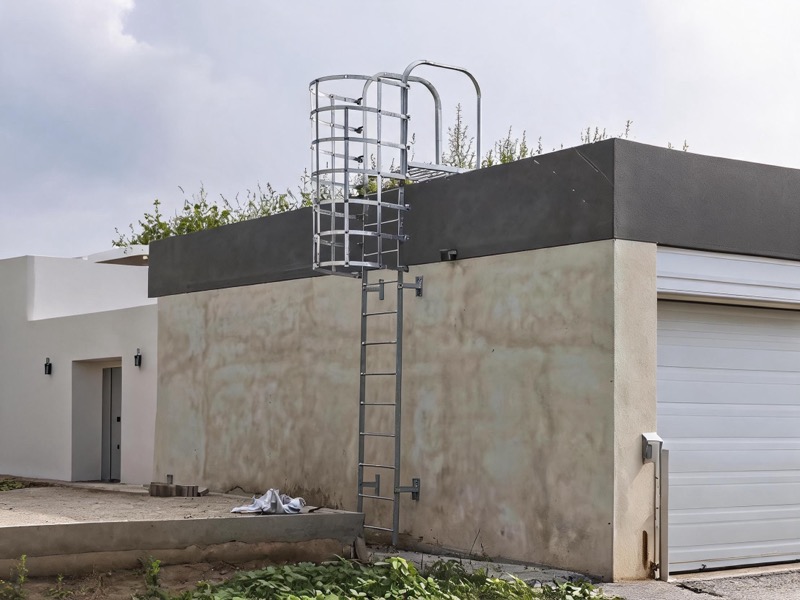
Under 24 ft Access
Low-height mezzanines, platforms and maintenance access — no cage required.
OSHA 24 ft Threshold
Under 24 ft, OSHA 1910.28 may not require a cage or fall protection — confirm your height with us.
Spec Confirmation
We confirm the threshold and spec before you order — no compliance surprises.
Uncaged Lower Price
Lower Price – Uncaged vs Caged
No cage means fewer materials, fewer welds and a lower line-item cost — with the same factory quality and paperwork.
Uncaged Lower Price
Fewer components and welds — savings passed straight to you.
Fast Delivery
Simpler build = shorter lead time on uncaged ladders.
Factory-Direct
Buy direct from the production floor — no distributor markup.
Specifications (No Cage)
Ladder Specifications (No Cage)
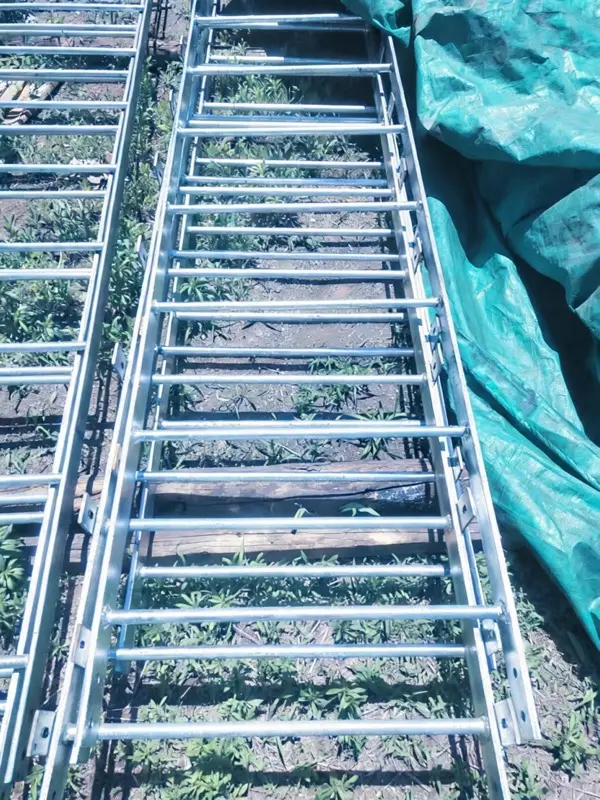
Same engineered rungs and stringers as our caged ladders — minus the cage parts for low-height runs.
Get My Uncaged Ladder Quote| Specification | Value |
|---|---|
| Rung Diameter | Φ20 mm |
| Rung Spacing | 280 mm (≤300 mm) |
| Clear Width | 500 mm |
| Cage | Not fitted (under 24 ft / no-cage spec) |
| Load Rating | 1.5 kN per rung |
| Galvanizing | HDG 85–100 μm (ISO 1461) |
| Materials | Q235B / HDG / SS304 |
| Standards | OSHA 1910.28 · EN ISO 14122-4 |
DoC & Material Certs With Every Order
Compliance Docs With Every Order
DoC and MTC material certificates ship with every uncaged vertical ladder — traceable and audit-ready.
- DoC — OSHA 1910.28 & EN ISO 14122-4
Declaration of Conformity to the relevant standard
- MTC Material Certificate
Material certificate for Q235B / SS304 / SS316
- Coating Thickness Report
HDG 85–100 μm per ISO 1461, measured per part
Get a Ladder Without Cage Quote
Get a Ladder Without Cage Quote
Free quote in 24 hours + free compliance kit with every order. Tell us your height — we'll confirm whether a cage is required and price accordingly.
- 24h itemized quote
- Cage requirement check included
- DoC, MTC & coating report included
When Is a Vertical Ladder Legally Allowed to Run Without a Cage?
Buying a ladder you do not need wastes money; skipping a cage you do need fails inspection. The honest answer is that every major code sets a rise threshold, and below it an uncaged fixed vertical ladder is a fully compliant product — not a compromise. Measure the vertical height from the base to the top landing, not the slope length along the stringers, then read the threshold that governs your site.
| Standard | Uncaged rise allowed | What changes above it |
|---|---|---|
| OSHA 1910.28 (US) | Above 24 ft | LSS or PFAS for ladders installed after Nov 19, 2018; existing caged ladders grandfathered to 2036-11-18 |
| EN ISO 14122-4 (EU, Gulf) | Below 3 m | Safety cage expected from 3 m; rest platforms on tall routes |
| AS 1657 (Australia) | Below 3 m | Fall protection required above the threshold |
Two US timing notes matter for specifiers. Existing ladders carry a transition date of 2036-11-18 toward ladder safety systems, and in September 2025 OSHA published a proposal to rescind parts of the rule — it remains undecided, so we quote to the version your authority having jurisdiction enforces today. Under every regime, the rungs themselves stay the same: Φ20 mm bars at 280 mm centers on a 500 mm width, hot-dip galvanized to ISO 1461.
Field Story — Parcel Hub, England
Six Short Climbs the Standard Never Asked to Cage
A maintenance lead at a regional parcel hub walks through the canopy-access retrofit that went uncaged — legally, cheaply, and with an upgrade path held open. The build card is that project.
Before — lamp changes by order-picker
The loading canopy carried lighting, gutter access and six small plant decks between 2.4 and 2.9 m — each reachable only by reversing an order-picker truck out of the sort aisle, booking it, and standing a technician on the cage with a harness. A twenty-minute lamp swap cost forty minutes of truck time, and it happened in the sort hall's peak hours. Under EN ISO 14122-4 and AS 1657 alike, climbs under 3 m never needed a cage — the hub had simply never built the ladders.
During — six climbs, one drawing, hoops deferred not deleted
We drew six uncaged vertical ladders on the same core the caged models use — Φ20 rungs at 280 mm, 500 mm clear width, HDG Q235B to ISO 1461 — with top guardrails and self-closing gates where a deck met an edge. The rails carry pre-drilled hoop bosses at 1500 mm centres: if a future risk assessment wants cages, hoops bolt on without drilling or welding on a live sort hall. DoC and MTC 3.1 shipped per unit; install was six bolt-downs in one night shift.
After — the order-picker stayed in the aisle
Lamp rounds moved to a planned-maintenance Sunday with two technicians and a toolbox. Removing the cage material cut the fab cost visibly per unit, and the money went into the self-closing gates — the component that actually faces the fall exposure at these heights. The auditor read the 3 m rule, checked the gates, and asked for nothing else.
| Build Card — Six Canopy Climbs | As Built | Why It Was Specified |
|---|---|---|
| Heights | 2.4–2.9 m, all under the 3 m line | EN ISO 14122-4 and AS 1657 ask no cage below 3 m |
| Core | rungs Φ20 @280, width 500, HDG | identical build to caged models — no second spec to maintain |
| Edge protection | guardrail + self-closing gate at each deck | the gate carries the real exposure at this height |
| Upgrade path | pre-drilled hoop bosses @1500 | cage bolts on later — no hot works in the sort hall |
| Install | six bolt-downs, one night shift | sort operations never noticed |
Is Skipping the Cage Right for Your Climb?
Uncaged Vertical vs Caged Build vs Step Stool Culture
Under the threshold, an uncaged vertical ladder is not a compromise — it is the standard's own answer. The decision the hub ran, in the order it matters:
| Decision Factor | Uncaged Vertical Ladder | Caged Vertical Build | Keep Using Plant Equipment |
|---|---|---|---|
| Rule fit under 3 m / 24 ft | the standard's own answer | allowed — over-spec, not required | depends on equipment rules, not ladder rules |
| Cost per position | lowest — no hoops, no strap welding | cage adds material and fab time | no capex, high per-use cost |
| Access speed | walk up, tools in hand | walk up, through the flare | book, travel, position, harness |
| Fall exposure | managed by gates at landings | physically contained | managed by equipment procedure |
| Change of use | hoop bosses accept a later cage | already at maximum protection | re-justified every risk assessment |
| Audit story | height measured, rule quoted, gate shown | cage speaks for itself | procedural — explained every cycle |
- Choose the uncaged vertical when every climb sits under your standard's threshold — spend the savings on self-closing gates, where the exposure actually lives.
- Choose the caged build when heights vary, a risk assessment may tighten, or corporate policy asks for one ladder standard across the whole site.
- Keep equipment-based access only for genuinely occasional one-off heights — the per-use cost and booking friction bury the capex saving within a year.
Feature → Advantage → Your Outcome
What an Uncaged Vertical Build Buys the Maintenance Day
Five lines from the canopy drawing, translated into what the hub actually felt within a month.
| Feature | Advantage | Your Outcome |
|---|---|---|
| Same core as caged models | Φ20 rungs @280, 500 mm width, HDG | one spec to inspect across the whole site |
| No cage below the threshold | steel saved where the rule asks none | budget moves to gates and landings — the real exposure |
| Pre-drilled hoop bosses @1500 | cage retrofits without hot works | a tightened risk assessment is a bolt-on, not a rebuild |
| Self-closing gates at decks | edge guarded automatically | the audit closes on the height rule plus one photograph |
| Bolt-down install | one night shift for six positions | operations never booked a shutdown |