 LadderCage
The Honest Answer, Straight From the Factory
Does A Ladder Cage Prevent Falls
A cage limits fall range but does not arrest; we supply both. Free compliance assessment, direct factory pricing, test reports & DoC included.
Projects Delivered
Countries Exported
Assessment Response
Systems We Supply
The Truth, Plainly
Cage Limits Fall Range, Fall Arrest Stops It
A ladder cage contains a fall inside the cage envelope — it limits how far you travel, but it does not arrest the fall. A fall arrest system (rail or line) actually stops the fall. Understanding the difference is the first step to a compliant, safe vertical climb.
Cage — Limits
Contains a fall within the cage; limits fall range.
Fall Arrest — Stops
Rail or line system that arrests the fall itself.
Cage + Fall Arrest, One Supplier
We Supply Both – Cage & Fall Arrest
Retrofit or new build — we supply the cage, the fall arrest system, or both, and the compliance documents that go with them.
Ladder Cage
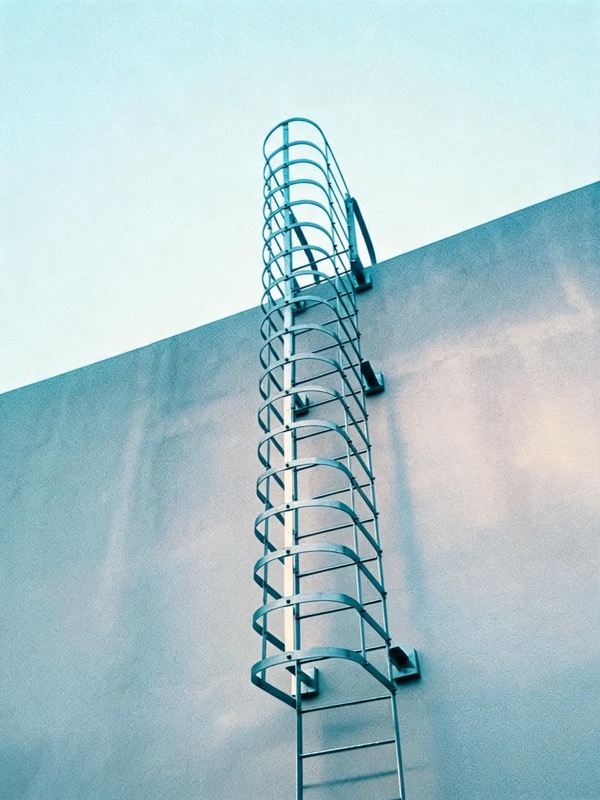
Galvanized or stainless cage hoops and straps that limit fall range and provide a defined climbing envelope.
Fall Arrest System
Vertical rail or cable systems that arrest a fall, for ladders and retrofits.
| Specification | Value |
|---|---|
| Rung Diameter | Φ20 mm |
| Rung Spacing | 280 mm (≤300 mm) |
| Clear Width | 500 mm |
| Cage Diameter | Φ700 mm (hoops 40×5 @≤1500, straps 30×3) |
| Cage Start | 2.2 m above floor |
| Load Rating | 1.5 kN per rung |
| Material | Q235B HDG / SS304 / SS316 |
| Standards | OSHA 1910.28 · EN ISO 14122-4 |
Free Compliance Assessment
Free Compliance Assessment
Not sure whether your ladder needs a cage, fall arrest, or both? Send us the site and height and we'll assess it free — with test reports and DoC included on any order.
- Free Site & Height Assessment
We recommend the right system for your climb
- Test Reports & DoC Included
OSHA / EN ISO 14122-4 compliance file with every order
- Direct Factory Pricing
Cage and fall arrest quoted transparently

Get a Ladder Cage Quote
Get a Ladder Cage Quote
Your compliance assessment and quote are on the way within 24 hours. Tell us the ladder height, whether you need a cage, fall arrest or both, and whether you need an assessment or a quote.
- Free compliance assessment
- Cage + fall arrest — we supply both
- Test reports & DoC included
Mechanism and Limits
What a Ladder Cage Does — and Where It Stops
Honest engineering separates the physics of a cage from its boundaries. The left column is what the basket genuinely delivers; the right column is where buyers must not over-trust it.
| What the Cage Does | What It Cannot Do |
|---|---|
| Restrains a backward fall inside the Φ700 envelope of hoops and straps | Stop the fall itself — no attachment means no arrest force on the worker |
| Works passively on every climb, worn gear or not | Qualify as the LSS/PFAS a new OSHA 1910.28 build above 24 ft requires |
| Shields the torso from swinging clear of the rails on a slip | Cover the uncaged first 2.2 m or the zone above the cage exit |
| Holds its geometry for decades under HDG 85–100 μm protection | Compensate for skipped inspections or corrosion left to run |
Unsure which side of the table your site lives on? The free compliance assessment reads your climb height against OSHA and EN rules within 24 hours.
The Mechanics, Stated Honestly
Fall Physics: What a Backward Rotation Actually Is, and Where the Cage Draws Its Line
A slip on a vertical ladder is not a straight drop — it is a rotation. The boot leaves the rung, the body pivots backward around the grip line, and the centre of mass swings out past the rails on an arc, not a plumb line. That rotation is the event a cage answers: the hoops and straps form a barrel at Φ700 mm, so the swinging torso meets a steel wall within the hoop pitch of 1500 mm instead of rotating free of the ladder entirely. The physics of that meeting, and its limits, is what this page is really about.
| Stage of the Event | The Physics in Play | What the Cage Contributes | The Limit to Respect |
|---|---|---|---|
| The slip begins | Foot loses the rung; body mass pivots rearward about the hands on the stringers | The 280 mm rung pitch kept the stride short — the miss is one rung, not two | A pitch stretched beyond 300 mm turns a stumble into a launch |
| The rotation develops | Centre of mass travels outward on an arc; grip alone cannot cancel the momentum | The 30×3 mm strap wall stands where the arc leads — containment, not arrest | Containment limits range; it removes no energy from the body |
| The basket takes the load | Torso load passes to straps, straps to hoops, hoops to the ladder and anchors | Hoops of 40×5 mm at 1500 mm keep the ring round under radial load | A corroded or flattened hoop is a missing wall, whatever the drawing said |
| The climber recovers or rests | Body re-foots on the next Φ20 mm rung, rated 1.5 kN for the step down | The whole sequence needed no wearer action — passive, every climb | Recovery assumes the climber stayed inside the envelope from 2.2 m upward |
| What the cage never does | Fall arrest means a device absorbing energy while attached to the worker | Nothing — no attachment, no absorber, no arrest force on the worker | This is why OSHA 1910.28 requires LSS or PFAS on new climbs above 24 ft |
Read the physics and the honest sentence writes itself: a cage prevents the fall from becoming a free fall to grade — it does not prevent the fall event, and it is not a harness. Send your climb height and code to the free assessment and we will state which protection your bay owes under that sentence, with a quote, inside 24 hours.
Does Prevention, Decided by You
Reader Decision Guide: When the Cage Answers Your Risk, and When It Does Not
The physics page gives you the sentence; this guide applies it. Whether a cage ladder prevents falls on your site depends on three questions about your climb — answer them and the protection purchase decides itself, including the case where the right answer costs nothing at all.
The cage answers your risk when
The climb is 3 m to 10 m on EN and AS sites — or a US bay a cage still covers — and the exposure is the routine backward slip of a trained maintainer. Here containment is the proportionate answer: a $600–900 caged flight at $95 per metre HDG, platforms past 6 m, no harness programme to run. The cage does its physics passively, every climb, for decades.
The cage needs the system when
The climb outruns the containment envelope: above 10 m under EN ISO 14122-4, or above 24 ft on a post-November 2018 US install where OSHA 1910.28 names an LSS or PFAS. The cage still restrains the routine slip, but the free-fall physics it cannot touch is exactly what the rule now covers. Order both layers from one quote and the sentence stays honest.
Neither purchase is owed when
The climb sits below every threshold — under 3 m on EN and AS sites, under the OSHA line in US general industry. The fall physics barely has room to develop; the owed controls are a clear base, a sound ladder and a disciplined exit. Spending on steel here is theatre — the honest supplier says so, and we quote nothing you do not need.
Between two cards sits every interesting site — send the height and the rule and the free compliance assessment places you in one, with the itemized quote attached, inside 24 hours.
Physics, Backed by Paper
What Each Feature Adds to the Containment Promise
Five features, each one a row of the fall physics held to a number.
| Feature | Advantage | Your Outcome |
|---|---|---|
| Containment geometry held to drawing | Φ700 barrel, hoops 40×5 mm at 1500 mm, straps 30×3 mm | the wall the rotation meets is the wall that was calculated |
| 1.5 kN proof per rung | the recovery step lands on a rated member | the second half of the physics works as drawn |
| LSS and PFAS from the same desk | the arrest layer quoted where containment ends | the honest sentence becomes a complete purchase order |
| Structural calculation sheet per project | load paths signed by an engineer | the physics is defensible in a file, not just on a page |
| Free honest-physics assessment | your bay told what a cage will and will not do | no over-trust sold to you, no under-protection shipped |
Ladder Cage Fall Prevention FAQ
Related Pages
All Cage Ladders
Browse by type, material & application
Cage Ladder Fall Protection
Requirements for cages and arrest systems
Alternatives to Ladder Cages
Compare cage, rail and line systems
Cage vs Fall Protection
Know the difference before you spec
Standards Hub
OSHA, EN ISO, BS, AS requirements
Get a Quote
24h assessment & quote